


7 Mistakes You’re Making with Lift Kits (and How to Fix Them)
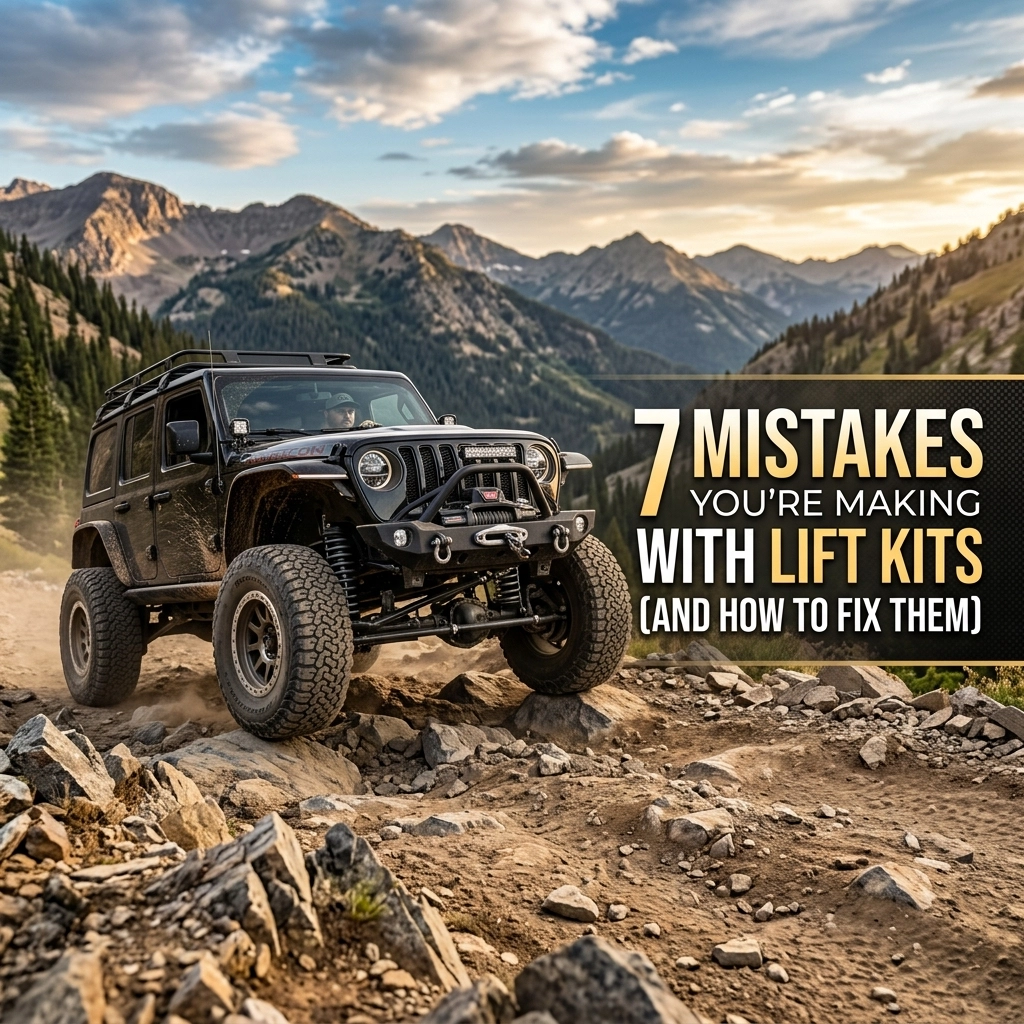
You’re barreling down a backroad, the sun is setting, and you’ve finally got that lift kit installed. You feel ten feet tall: until you hit a small pothole and the steering wheel starts shaking like a wet dog. Suddenly, that aggressive stance doesn’t feel so confident. Your heart sinks. Did you miss a bolt? Is the axle supposed to look like that?
At Trendsetters Customs, we’ve seen it all. As a family-owned, veteran-owned, and woman-owned shop in Weatherford, we live for the dirt and the grease. We know that a lift kit isn’t just about looking mean at the stoplight; it’s about performance, safety, and the grit to handle the Texas trails. Whether you’re wrenching in your driveway or looking for off-road ready custom fabrication, making one small error can lead to a massive headache.
Here are the seven most common mistakes we see people making with lift kits and, more importantly, how you can fix them before they ruin your ride.
1. Skipping the “Before” Measurements
Think about it: would you try to build a house without a foundation level? Most guys are so excited to tear into the box of new parts that they forget to measure where the truck sits naturally.
The Mistake: You don’t know your baseline. Without “before” measurements from the center of the wheel hub to the fender flare, you have no way of knowing if your new lift is sitting level or if your suspension geometry is leaning to one side.
The Fix: Grab a tape measure. Check all four corners. Record your driveshaft angles and the length of your stock brake lines. These numbers are your roadmap. If something feels “off” after the install, these measurements are the only way to troubleshoot if the kit actually gave you the advertised height or if you’ve got a sagging spring right out of the gate.
2. Choosing the Wrong Kit for Your Reality
It’s easy to get “height envy.” You see a truck on 40s and think, “I need that.” But are you actually going to crawl rocks, or are you just driving to work and hitting the occasional hunting lease?
The Mistake: Buying a kit based on price or “cool factor” rather than function. A cheap spacer lift might give you the look, but it won’t give you the travel or the durability of a full suspension system. Conversely, a high-end racing bypass shock setup is overkill (and uncomfortable) if you’re just cruising the highway.
The Fix: Be honest about your needs. If you just want to fit bigger tires, a leveling kit might be your best bet. If you’re serious about the dirt, you need to dive into suspension secrets to find a system that balances articulation with ride quality.

3. Tightening Bolts While the Truck is Airborne
This is probably the most common “rookie” mistake we see in the shop. You’ve got the truck on jack stands, the new shocks are in, and you crank those bolts down as hard as you can while the wheels are hanging in the air.
The Mistake: When you torque suspension bolts while the suspension is fully extended (drooped), the rubber bushings get locked into that “hanging” position. Once you drop the truck to the ground, the weight of the vehicle forces those bushings to twist. This creates constant tension, leading to a stiff ride and bushings that tear apart in months instead of years.
The Fix: Only “snug” your bolts while the truck is in the air. Lower the vehicle onto its own weight, bounce the bumper a few times to let the suspension settle into its natural ride height, and then apply the final torque. This ensures your bushings are in a neutral position when you’re driving down the road.
4. Trusting the “Ugga-Dugga” Instead of a Torque Wrench
We get it. The impact wrench is fast and loud. But your suspension is what keeps you attached to the road.
The Mistake: Over-torquing can stretch or snap bolts, while under-torquing allows the vibrations of the road to back the nuts off completely. Neither scenario ends well when you’re doing 70 mph.
The Fix: Use a calibrated torque wrench. Follow the manufacturer’s specs to the letter. Once you’re done, take a paint pen and mark a line across the bolt head and the frame. This “witness mark” allows you to see at a glance if a bolt has started to loosen during your post-install inspections.
5. Neglecting the Professional Alignment
Your truck’s steering geometry is like a delicate ecosystem. When you change the height, you change the caster, camber, and toe.
The Mistake: Thinking you can “eyeball it” or that a little steering wheel pull is normal. If your alignment is off, you’ll chew through a set of expensive 4×4 tires in a matter of weeks.
The Fix: As soon as the kit is on, drive it straight to a professional alignment rack. Some kits require specific specs that differ from the factory settings. Don’t risk “death wobble” or feathering your treads because you wanted to save a hundred bucks on an alignment.

6. Forgetting the Supporting Cast (Brake Lines and Drivelines)
A lift kit is a system, not just a pair of springs. When you move the axle further away from the frame, everything attached to that axle gets stretched.
The Mistake: Ignoring your brake lines and driveshaft angles. If you flex your suspension off-road and your brake lines are too short, they’ll snap like a rubber band. If your driveshaft angle is too steep, you’ll feel a constant vibration that will eventually eat your U-joints and differential.
The Fix: Check your slack. Most kits over 3 inches require extended brake lines or drop brackets. If you’re feeling vibrations, you might need a differential or axle service to correct the geometry. Don’t let a $500 lift kit turn into a $5,000 drivetrain repair.
7. Buying Tires Before the Lift is Done
It’s the classic “cart before the horse” scenario. You find a killer deal on a set of 37s and buy them before you’ve even picked out your lift.
The Mistake: You realize too late that the tires rub the frame, the bumper, or the wheel wells. Now you’re forced to either cut up your brand-new truck or buy an even taller lift than you originally wanted, which might exceed your budget or garage clearance.
The Fix: Plan the build as a package. Determine the tire size you want, then find the lift that clears them safely without excessive trimming. Need help deciding? Check out our guide to choosing 4×4 tires to see what fits your goals.

Signs Your Lift Kit Needs Professional Help
If you’ve already installed your kit and something feels “off,” don’t ignore it. Your truck is talking to you. Here is what to listen, feel, and look for:
- Sounds:
- Clunking when hitting bumps (often a loose shock mount or track bar).
- Squeaking (usually dry bushings or bolts tightened while in the air).
- Grinding (could be a driveshaft binding at an extreme angle).
- Feelings:
- The “Death Wobble”: A violent shaking of the front end after hitting a bump.
- Bump Steer: When the truck jerks to one side just because the suspension compressed.
- Vibration in the seat: Usually points to rear driveline angles.
- Sight:
- Uneven tire wear: Patterns like cupping or “sawtooth” edges on the tread blocks.
- Leaking shocks: Fluid streaking down the side of your new shiny components.
Your Partners in the Adventure
Look, we know the DIY spirit is what built the off-road community. There’s a certain pride in getting your hands dirty and building something with your own two wrenches. But we also know that your vehicle is what gets you to the job site, takes your family to the lake, and brings you home from the trail.
At Trendsetters Customs, we aren’t just a shop; we’re part of your crew. We treat every truck that rolls into our bays like it belongs to our own family. Whether you need a second pair of eyes to check your work, a professional alignment, or a full custom swap and upgrade, we’ve got the veteran-led discipline and the expert touch to get it done right.
Don’t let a simple mistake turn your dream build into a driveway ornament. If your lift isn’t sitting right or that “death wobble” has you spooked, give us a call or swing by the shop. Let’s get your rig trail-ready and rock-solid.
Ready to take your build to the next level? Come see us at Trendsetters Customs in Weatherford. Let’s talk shop and get you back on the road: or off it.
Related Posts
How to Choose the Best Trailer Hitches for Your Towing Needs
You’ve got the rig. You’ve got the trailer. You’ve got the weekend planned out down to the last campfire log. But as you’re backing up to the tongue, a thought crosses your mind: Is this hitch actually up for the…

10 Reasons Your Suspension Leveling Kit Isn’t Working (And How to Fix It)
You just pulled your truck out of the driveway after installing that brand-new leveling kit. You wanted that aggressive stance, the extra clearance for beefier tires, and that "king of the road" feel. But instead of a smooth ride, your…
Looking For 4×4 Accessories? Here Are 10 Things You Should Know
Picture this: You’re two miles deep into a Texas backroad. The mud is thick, the sun is dipping below the horizon, and your tires are spinning uselessly in a rut that’s deeper than it looked. You’ve got a "cool" looking…