


How to Choose the Best Trailer Hitches for Your Towing Needs
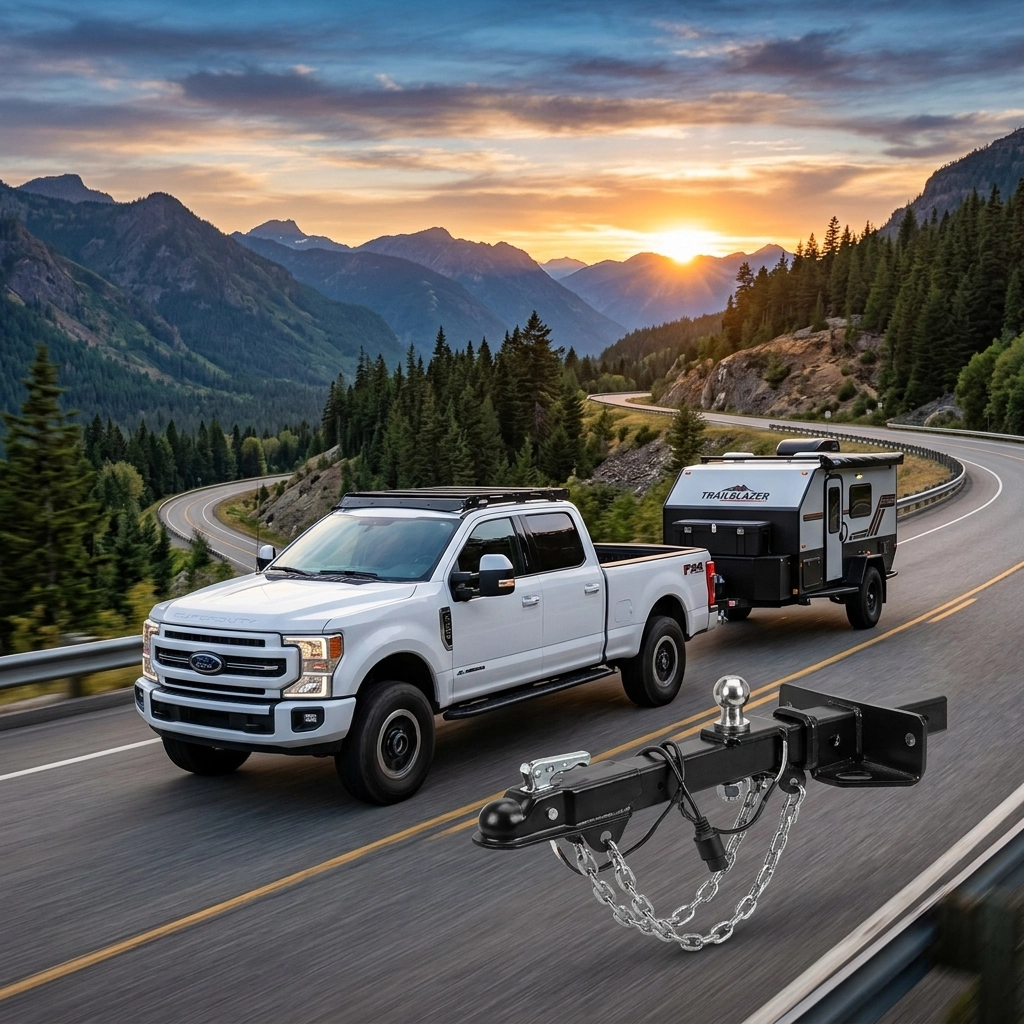
You’ve got the rig. You’ve got the trailer. You’ve got the weekend planned out down to the last campfire log. But as you’re backing up to the tongue, a thought crosses your mind: Is this hitch actually up for the job?
It’s a high-stakes question. Towing isn’t just about moving weight from Point A to Point B; it’s about doing it without your trailer deciding to take a detour into the ditch: or worse, bringing your truck with it. Choosing the right trailer hitch is the difference between a smooth haul and a white-knuckled nightmare on the interstate.
At Trendsetters Customs, we aren’t just some faceless corporation. We are a family-owned, veteran-owned, and woman-owned business built on grit and reliability. We live for the trail, the job site, and the open road. When we talk about towing, we’re talking about gear we’d trust with our own families and our own gear.
Let’s get you sorted so you can hit the road with confidence.
What Are You Pulling? Understanding the Numbers
Before you even look at a shiny new piece of iron, you need to know your numbers. Think of your hitch like a cell phone battery: if you try to run a high-def game on a 5% charge, it’s going to fail. If you try to pull a 10,000-pound camper with a Class II hitch, you’re asking for a catastrophe.
There are two main numbers you need to memorize:
- Gross Trailer Weight (GTW): This is the total weight of the trailer plus everything inside it (water, gear, toys, furniture).
- Tongue Weight (TW): This is the downward force exerted on the hitch ball by the trailer coupler. Usually, this should be about 10-15% of your GTW.
If your tongue weight is too light, your trailer will fishtail like a trout out of water. If it’s too heavy, your truck’s front tires will lose traction, making steering a suggestion rather than a command. Do you really want to play “guess the weight” when you’re doing 70 mph?

Decoding the Classes: From Class I to Class V
Not all hitches are created equal. They are categorized into “Classes” based on how much they can handle. Choosing the right one depends entirely on your vehicle’s frame and what you plan to haul.
Class I & II: The Lightweight Contenders
These are for your daily drivers: cars, crossovers, and small SUVs.
- Class I: Rated up to 2,000 lbs. Good for bike racks or a tiny utility trailer for yard waste.
- Class II: Rated up to 3,500 lbs. This is where you start seeing small boats or pop-up campers.
Class III: The Standard Workhorse
This is the most common hitch you’ll see on the road. Most full-size SUVs and half-ton trucks come with a Class III receiver.
- Rating: Up to 8,000 lbs.
- Uses: Mid-sized campers, utility trailers, and most recreational boats. It’s the “jack of all trades” in the towing world.
Class IV & V: The Heavy Hitters
Now we’re getting into the serious stuff. If you’re hauling heavy equipment or massive toy haulers, you need the big iron.
- Class IV: Rated up to 10,000 lbs.
- Class V: These can go up to 20,000 lbs or more depending on the specific model. These are designed for heavy-duty trucks (2500/3500 series) and are built to handle massive tongue weights.
Are you unsure where your truck falls? Check the sticker inside your driver-side door jamb. It’ll tell you exactly what your vehicle is rated to pull. Don’t outdrive your gear.
Receiver Hitches vs. Specialized Heavy Duty
For most folks, a standard Receiver Hitch: the square tube under your bumper: is all they’ll ever need. It’s versatile, allowing you to swap out ball mounts for different trailer heights. But what if you’re moving a mountain?
Gooseneck Hitches
If you look in the bed of a serious ranch truck or a hotshot rig, you’ll see a ball mounted right over the rear axle. That’s a gooseneck. By placing the weight over the axle rather than behind the bumper, you get incredible stability and a much tighter turning radius. It’s the gold standard for livestock trailers and heavy flatbeds.
Fifth-Wheel Hitches
Commonly used for large RVs, these look like the coupling on a semi-truck. They offer a smooth ride and superior weight distribution. If you’re planning on living the nomadic life in a 40-foot camper, this is your best friend.

Why Quality Matters: The B&W Difference
We’ve seen it all at Trendsetters Customs. We’ve seen cheap, “budget” hitches rust through in two seasons or, worse, bend under a load they were supposedly rated for. When you’re hauling your livelihood or your family’s vacation home, “budget” is a dangerous word.
That’s why we are a proud authorized B&W dealer. B&W hitches are made right here in the USA with American steel. Their “Tow & Stow” system is a game-changer: it allows you to adjust the height and ball size in seconds and then tuck the whole thing under the vehicle when you’re done so you don’t bark your shins in the parking lot.
Investing in a high-quality hitch is like buying a good pair of work boots. You might pay a bit more upfront, but they won’t fail you when the mud gets deep and the day gets long.
Symptoms of a Bad Setup: Signs to Look Out For
Even with the right class of hitch, things can go south if the installation or the maintenance is lacking. You need to use your senses to stay safe.
- What you Hear: Listen for clunking or rattling. A hitch should be silent. If you hear metal-on-metal banging when you accelerate or brake, something is loose or worn out.
- What you Feel: If the steering feels “light” or the truck is “porpoising” (bouncing up and down), your tongue weight is likely off. If you feel a “jerk” when stopping, your hitch pin or receiver might be wallowed out.
- What you See: Check for rust around the mounting bolts. Look for hairline cracks in the welds. If the hitch looks like it’s sagging or angled downward, stop immediately.
If you’re experiencing any of these, it’s time for a professional eyes-on inspection. Our team at Trendsetters specializes in off-road ready custom fabrication and 4×4 upgrades, and we apply that same rugged standard to every towing setup we touch.

Compatibility: Does It Actually Fit Your Vehicle?
You can’t just grab any Class IV hitch and bolt it to your truck. Every vehicle frame is shaped differently. Exhaust pipes, spare tire carriers, and fuel tanks all fight for space under your rig.
When you’re choosing a hitch, ensure it is vehicle-specific. A “universal fit” often means “doesn’t fit anything well.” A proper hitch should bolt directly into the factory-drilled holes in your frame. If you’re having to drill or weld on a modern truck frame without knowing exactly what you’re doing, you’re potentially compromising the structural integrity of the vehicle.
Don’t forget the electrical! A hitch is useless if your trailer lights aren’t working. Whether you need a 4-way flat or a 7-way round plug, make sure your wiring is tucked away and protected from the elements.
The Trendsetters Difference
At the end of the day, towing is about trust. You’re trusting your vehicle, your hitch, and your own skills. We’re here to make sure the gear side of that equation is rock solid.
As a veteran-owned shop, we value precision. As a woman-owned shop, we value clear communication and transparency. As a family-owned shop, we care about your safety as much as our own. We don’t just sell parts; we provide solutions that help you get the job done.
Whether you need a simple auto-service-shop checkup or a complete heavy-duty towing overhaul, we’ve got your back.

Let’s Get You Hooked Up Right
Don’t leave your safety to chance with a “good enough” hitch from a big-box store. Your truck deserves better, and your trailer deserves a connection that won’t quit.
Ready to upgrade your towing game? Whether you’re looking for a B&W adjustable ball mount or a full gooseneck installation, the crew at Trendsetters Customs is ready to help. We’ll look at your rig, listen to your needs, and get you set up with a system that’s as rugged as the Texas terrain.
Stop by the shop or give us a call today. Let’s make sure your next haul is your safest one yet!
Related Posts
7 Mistakes You’re Making with Lift Kits (and How to Fix Them)
You’re barreling down a backroad, the sun is setting, and you’ve finally got that lift kit installed. You feel ten feet tall: until you hit a small pothole and the steering wheel starts shaking like a wet dog. Suddenly, that…

10 Reasons Your Suspension Leveling Kit Isn’t Working (And How to Fix It)
You just pulled your truck out of the driveway after installing that brand-new leveling kit. You wanted that aggressive stance, the extra clearance for beefier tires, and that "king of the road" feel. But instead of a smooth ride, your…
Looking For 4×4 Accessories? Here Are 10 Things You Should Know
Picture this: You’re two miles deep into a Texas backroad. The mud is thick, the sun is dipping below the horizon, and your tires are spinning uselessly in a rut that’s deeper than it looked. You’ve got a "cool" looking…